
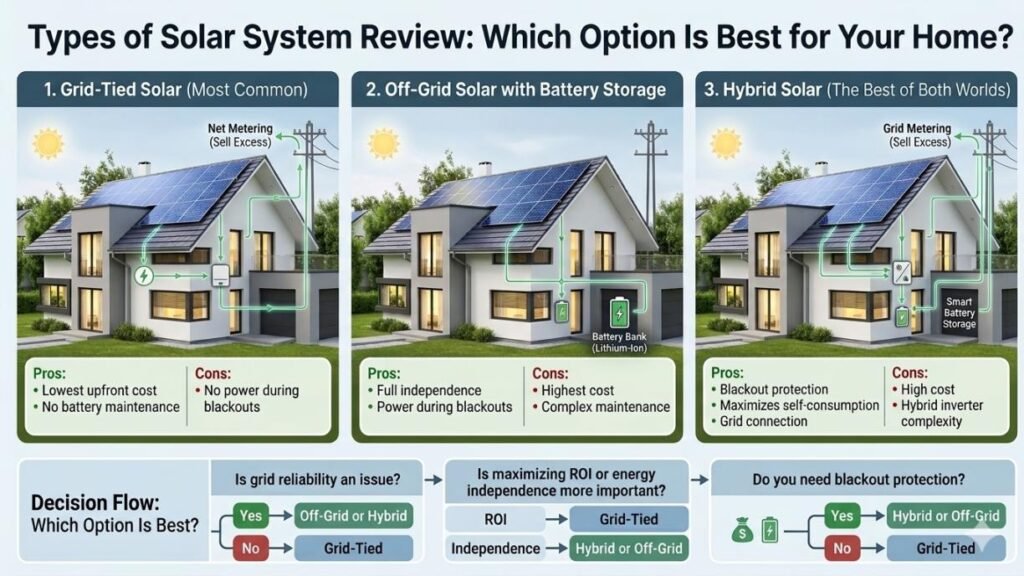
Rising electricity costs and increasing environmental concerns are encouraging more homeowners to switch to solar energy. Solar power is no longer just an alternative energy source; it has become a practical long-term solution for reducing electricity bills and achieving energy independence.
However, understanding the different types of solar system is essential before making an investment. Each system has its own structure, cost, benefits, and limitations. The right choice depends on your location, energy usage, budget, and long-term goals.
What Is a Solar System and How Does It Work?
A solar system, also known as a solar photovoltaic system, is a technology that converts sunlight into usable electricity for homes and businesses. It is one of the most reliable and widely used renewable energy solutions in the world.
- Solar panels that capture sunlight and generate electricity
- Solar inverter that converts DC electricity into AC electricity
- Mounting structures that secure panels on rooftops or ground
- Electrical wiring that connects the system components
- Battery storage system for backup power (optional in some systems)
The 3 Main Types of Solar System Explained
There are three primary uses in residential installations. Each one serves a different purpose and is designed for different energy needs.
- On-grid solar system
- Off-grid solar system
- Hybrid solar system
On-grid systems focus on cost savings, off-grid systems focus on independence, and hybrid systems combine both savings and backup power.
On-Grid Solar System Review
An on-grid solar system is the most commonly used among all types of solar system. It is directly connected to the public electricity grid, allowing seamless energy exchange between solar power and grid electricity.
During the daytime, solar panels generate electricity that powers household appliances. If excess energy is produced, it is exported to the grid under net metering policies where available..
Advantages of On-Grid Systems
- Lowest installation cost compared to other systems
- No need for battery storage
- High efficiency in energy usage
- Quick return on investment
- Suitable for urban and suburban households
Limitations of On-Grid Systems
- No backup power during grid outages
- Dependence on utility electricity supply
- Savings depend on local net metering policies
Off-Grid Solar System Review
An off-grid solar system is one of the most independent types of solar system because it operates completely without connection to the utility grid.
This system depends entirely on solar panels and battery storage. Energy generated during the day is stored in batteries and used at night or during cloudy conditions when solar production is low.
Advantages of Off-Grid Systems
- Complete energy independence from utility companies
- Ideal for remote or rural areas without grid access
- No monthly electricity bills
- Full control over energy usage and storage
Limitations of Off-Grid Systems
- Higher initial installation cost
- Expensive battery replacement over time
- Requires careful energy management
- System must be properly sized to avoid shortages
Hybrid Solar System Review
A hybrid solar system combines the features of both on-grid and off-grid systems, making it one of the most flexible types of solar system available today.
It integrates solar panels, battery storage, and grid connection into a single system. This allows homeowners to store excess energy while still remaining connected to the grid for backup power.
Advantages of Hybrid Systems
- Reliable backup power during electricity outages
- Lower electricity bills through solar usage
- Better energy control and flexibility
- Improved efficiency with stored energy use
- Reduced dependency on the grid
Limitations of Hybrid Systems
- Higher upfront installation cost
- Requires battery maintenance and replacement
- More complex system design and setup
On-Grid vs Off-Grid vs Hybrid: Which Solar System Wins?
Each system performs differently based on user needs and priorities.
| Feature | On-Grid | Off-Grid | Hybrid |
| Cost | Low | High | High |
| Battery Requirement | No | Yes | Yes |
| Grid Connection | Yes | No | Yes |
| Backup Power | No | Yes | Yes |
| Energy Independence | Low | Very High | Medium to High |
| Maintenance | Low | Medium | Medium |
7 Important Factors Before Choosing a Solar System
Choosing among the different types of solar system requires careful evaluation of several factors.
1. Electricity Usage
Understanding your monthly energy consumption is essential for selecting the right solar system size. It helps ensure the system can meet your daily electricity needs efficiently. Proper analysis also prevents under-sizing or over-sizing of the system.
2. Budget
The cost of solar installation varies based on the type of system you choose. On-grid systems are generally more affordable, while hybrid and off-grid systems cost more due to battery requirements. A clear budget helps you choose a system that balances cost and performance.
3. Power Outage Frequency
The frequency of power cuts in your area plays an important role in system selection. Hybrid and off-grid systems are better suited for regions with frequent outages. They provide reliable backup power when the grid is unavailable.
4. Roof Space
Available roof space determines how many solar panels can be installed. Larger roof areas allow higher energy production and better system performance. Limited space may require more efficient panel selection.
5. Local Regulations
Local policies such as net metering and solar subsidies directly affect system savings. Some regions offer financial incentives that reduce installation costs. Understanding these rules helps maximize your return on investment.
6. Battery Requirements
Battery storage is important for backup power and energy independence. It increases the overall system cost but improves reliability during outages. Not all systems require batteries, especially on-grid setups.
7. Long-Term Goals
Your long-term energy goals guide the best solar system choice. Some users prioritize cost savings, while others focus on independence or backup power. Aligning the system with your goals ensures better long-term satisfaction.
Common Solar Buying Mistakes
Many homeowners make avoidable mistakes when comparing types of solar system.
- Choosing a system only based on low price
- Ignoring battery replacement and maintenance costs
- Not analyzing actual electricity consumption
- Hiring inexperienced or unqualified installers
- Not planning for future energy needs such as electric vehicles or home expansion
Final Verdict
Choosing the right types of solar system depends on your individual needs and circumstances. On-grid systems are ideal for reducing electricity bills at a lower cost. Off-grid systems are best for complete independence in remote areas.
Hybrid systems provide the most balanced solution by combining savings, reliability, and backup power. A careful evaluation of your energy needs, budget, and location will help you select the most efficient and cost-effective solar solution for your home.
FAQs About Types of Solar System
Which solar system is best for home use?
Hybrid systems are often the best choice because they provide both cost savings and backup power.
Is on-grid solar cheaper than hybrid?
Yes, because on-grid systems do not require battery storage.
Can off-grid systems power a full house?
Yes, but they must be properly designed with sufficient panels and battery capacity.
Do hybrid systems require batteries?
Yes, batteries are essential for storing excess solar energy.
Which system works during power outages?
Hybrid and off-grid systems can operate during power cuts.
How long do solar panels last?
Most modern solar panels last between 25 and 30 years with proper maintenance.