
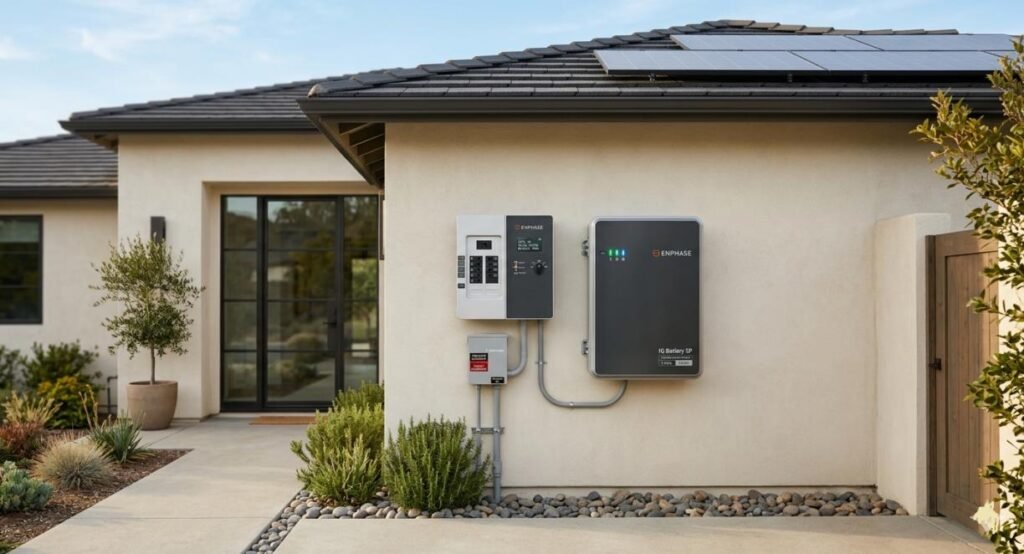
Home battery storage systems are becoming more popular as homeowners look for smarter ways to manage electricity usage and reduce dependence on the power grid. Solar energy systems are no longer complete with only solar panels because energy storage now plays a major role in backup power, energy savings, and electricity management. One of the most talked-about solutions in this market is the Enphase battery system.
The Enphase battery is designed to store excess solar energy generated during the day so homeowners can use that energy at night or during power outages. With advanced monitoring features, smart energy management, and modular battery expansion, the system has become a strong competitor in the home energy storage market.
Its cost, features, performance, advantages, disadvantages, installation process, and whether it is worth the investment for your home. This guide also compares Enphase battery systems with other popular solar battery options to help you make an informed decision.
What Is an Enphase Battery?
An Enphase battery is a home energy storage system designed to work with solar panel installations. It stores extra solar energy produced during the daytime and makes it available when electricity demand is high or when the power grid goes down. The latest generation is known as the Enphase IQ Battery series.
These batteries are designed using lithium iron phosphate technology, which is considered safer and more stable than traditional lithium-ion battery chemistry. The system integrates with the Enphase Energy ecosystem, including solar microinverters and monitoring software.
Homeowners can track their electricity production, battery usage, and overall system performance through a smartphone application. Unlike large single-unit battery systems, Enphase batteries use a modular design. This means homeowners can start with a smaller battery capacity and expand later if needed.
Read More: Samsung Galaxy S24 Ultra Review – Features, Camera, Battery & Performance
How Does an Enphase Battery Work?
The Enphase battery stores unused solar energy during sunny hours. Instead of sending all extra electricity back to the utility grid, the battery keeps that energy available for later use.The process usually works like this:
- Solar panels generate electricity during the day.
- The home uses the electricity it needs immediately.
- Extra energy charges the Enphase battery.
- Stored energy powers the home at night or during outages.
- The battery automatically manages energy flow based on usage patterns.
Main Features of Enphase Battery
Smart Energy Monitoring
One of the strongest features of the Enphase battery system is its advanced monitoring capability. Homeowners can monitor energy production and battery status in real time using the Enphase mobile app. The app displays:
- Solar generation
- Battery charging levels
- Electricity usage
- Backup status
- Historical energy data
Modular Battery Design
The modular design allows homeowners to expand their storage system over time. Instead of replacing the entire system, additional battery units can be added when energy needs increase. This flexibility is useful for:
- Growing families
- Increased electricity usage
- Electric vehicle charging
- Future solar upgrades
Backup Power Capability
Power outages are becoming more common in many regions. The Enphase battery can provide backup electricity during emergencies. Depending on battery size and energy usage, the system can power:
- Lights
- Fans
- Refrigerators
- Internet routers
- Essential appliances
High Safety Standards
The Enphase IQ Battery uses lithium iron phosphate chemistry, which offers improved thermal stability and safety compared to some other battery technologies. The system also includes:
- Automatic shutdown protection
- Temperature monitoring
- Intelligent battery management
- Fire-resistant design
Quiet Operation
Unlike fuel-powered generators, the Enphase battery operates silently. This makes it suitable for residential areas where noise can be a concern.
Enphase Battery Specifications
Here is a quick overview of common Enphase battery specifications.
| Feature | Enphase IQ Battery |
| Battery Type | Lithium Iron Phosphate |
| Usable Capacity | Around 3.5 kWh to 10+ kWh |
| Warranty | Up to 15 Years |
| Monitoring | Mobile App Support |
| Backup Power | Yes |
| Scalability | Expandable Modular Design |
| Operating Noise | Very Quiet |
| Installation Type | Indoor or Outdoor |
| Solar Compatibility | High |
| Smart Features | Advanced Energy Management |
Enphase Battery Cost
Average Purchase Price
The price of an Enphase battery system depends on battery capacity, installation complexity, and local labor costs. In most cases, homeowners can expect:
- Small systems: $3,000 to $6,000
- Medium systems: $7,000 to $12,000
- Larger backup systems: $15,000 or more
Installation Costs
Professional installation is required for safety and proper integration with the solar system. Installation expenses may include:
- Electrical upgrades
- Backup gateway setup
- Labor charges
- Permits and inspections
Installation costs usually range between $2,000 and $5,000 depending on project size.
Long-Term Savings
Although the upfront cost is high, many homeowners recover their investment over time through:
- Reduced electricity bills
- Lower peak-hour energy usage
- Backup power savings
- Solar energy optimization
Enphase Battery Performance Review
Daily Energy Efficiency: The Enphase battery performs efficiently during daily charging and discharging cycles. It stores solar energy effectively and delivers consistent backup performance. The system automatically prioritizes energy usage to maximize savings.
Performance During Power Outages: One of the most important factors for homeowners is backup reliability. The Enphase battery responds quickly during outages and can automatically switch to backup mode. Essential appliances continue operating without manual intervention.
Charging Speed: Charging speed depends on:
- Solar panel size
- Weather conditions
- Battery capacity
- Household electricity usage
Under ideal sunlight conditions, the battery charges efficiently throughout the day.
Mobile App Performance: The Enphase mobile application is user-friendly and provides detailed insights into energy management. Users can:
- Track solar production
- Monitor battery percentage
- View electricity trends
- Receive system alerts
Enphase Battery Pros and Cons
Pros
Smart Monitoring System: The mobile app provides excellent energy tracking and control.
Expandable Storage: Homeowners can easily increase battery capacity later.
Safe Battery Chemistry: Lithium iron phosphate technology improves safety and lifespan.
Reliable Backup Power: The system performs well during outages.
Quiet Operation: No loud engine noise like traditional generators.
Solar Integration: Works smoothly with Enphase solar microinverter systems.
Cons
High Initial Cost: The system can be expensive for some homeowners.
Professional Installation Required: DIY installation is not recommended.
Limited Whole-Home Backup: Smaller battery setups may only power essential appliances.
Availability Depends on Region: Some locations may have limited installer availability.
Enphase Battery vs Tesla Powerwall
The Tesla Powerwall is one of the biggest competitors to Enphase battery systems. Both products offer home energy storage, but they have different strengths.
Battery Design
- Enphase uses modular smaller batteries.
- Tesla uses a larger single-unit design.
Scalability: Enphase allows easier incremental expansion. Tesla systems usually require larger upfront installations.
Monitoring Features: Both systems provide smartphone monitoring apps, but Enphase is often praised for detailed solar analytics.
Safety: Enphase lithium iron phosphate chemistry is considered safer and more thermally stable.
Price: Tesla Powerwall may offer more storage per unit, while Enphase provides greater flexibility for smaller installations.
Enphase Battery Installation Process
Site Assessment: An installer evaluates:
- Roof solar capacity
- Electrical panel condition
- Energy consumption
- Battery placement location
System Design: The installer designs a customized battery setup based on household needs.
Installation Day: The process may include:
- Battery mounting
- Wiring integration
- Gateway setup
- Safety inspection
System Activation: After installation, the system is activated and connected to the monitoring app.
Battery Lifespan and Warranty
The Enphase IQ Battery is designed for long-term use.
Most systems offer:
- Up to 15-year warranty
- Thousands of charge cycles
- Reliable long-term performance
Battery lifespan depends on:
- Usage patterns
- Charging frequency
- Temperature conditions
- Maintenance quality
Maintenance Requirements
The Enphase battery requires minimal maintenance.
Recommended maintenance includes:
- Software updates
- Regular monitoring
- Occasional inspections
- Keeping ventilation areas clean
Unlike generators, there is no fuel replacement or oil maintenance.
Can Enphase Battery Run an Entire House?
The answer depends on battery size and household electricity usage. Small systems may only support:
- Lights
- Wi-Fi
- Refrigerators
- Small appliances
Larger multi-battery systems may support:
- Air conditioning
- Washing machines
- Entire home circuits
Homeowners should work with installers to calculate backup needs.
Is Enphase Battery Worth the Money?
For many homeowners, the Enphase battery is worth the investment because it provides:
- Energy independence
- Backup security
- Electricity savings
- Smart energy management
The value becomes even greater in areas with:
- Frequent outages
- High electricity rates
- Solar incentives
- Net metering limitations
Although the initial investment is significant, long-term savings and reliability make it attractive for solar users.
Common Enphase Battery Problems
No system is perfect, and some users report occasional issues.
Common concerns include:
- App connectivity delays
- Firmware update problems
- Installation scheduling delays
- High upfront cost
Most issues can be resolved through professional support and software updates.
Best Alternatives to Enphase Battery
If you are comparing solar battery systems, alternatives include:
- Tesla Powerwall
- Generac PWRcell
- LG Energy Solution
- FranklinWH battery systems
Each option offers different capacities, pricing, and smart features.
Tips Before Buying an Enphase Battery
Before purchasing, homeowners should:
- Compare multiple installer quotes
- Evaluate backup power needs
- Check local rebates
- Review warranty terms
- Analyze long-term electricity savings
Final Verdict
The Enphase battery is one of the most advanced home energy storage solutions available today. It combines smart technology, reliable backup power, expandable battery capacity, and strong safety features into a user-friendly system. Its modular design makes it ideal for homeowners who want flexibility and future expansion. The monitoring software is excellent, and the lithium iron phosphate battery chemistry adds long-term reliability.
While the upfront cost may be expensive, the overall performance, energy savings, and backup protection make it a worthwhile investment for many solar homeowners. If you already use an Enphase solar system, adding an Enphase battery can create a complete smart energy ecosystem for your home.
FAQs
Q1. What is an Enphase battery used for?
Ans: An Enphase battery stores extra solar energy for later use during nighttime or power outages.
Q2. How long does an Enphase battery last?
Ans: Most Enphase batteries are designed to last around 10 to 15 years depending on usage and maintenance.
Q3. Can an Enphase battery work without solar panels?
Ans: Yes, but the main purpose is to store solar energy. Without solar panels, charging options may be limited.
Q4. Is Enphase battery safe for home use?
Ans: Yes, the system uses lithium iron phosphate chemistry, which is considered one of the safest battery technologies.
Q5. How much does an Enphase battery cost?
Ans: Costs vary by system size, but most homeowners spend between $7,000 and $15,000 including installation.
Q6. Can an Enphase battery power an entire house?
Ans: Larger multi-battery setups can support whole-home backup, while smaller systems power essential appliances only.
Q7. Does Enphase battery reduce electricity bills?
Ans: Yes, storing solar energy and reducing grid usage can lower monthly electricity costs over time.